Palawan, known for its stunning landscapes and unique topography, relies on distinctive transportation modes to navigate its diverse terrain. Two noteworthy modes of transportation in Palawan are tricycles and bangkas.
Transportation
Tricycles:
- Design and Structure:
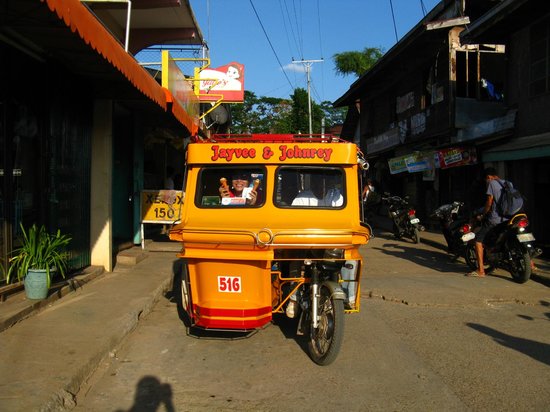
- Tricycles in Palawan are three-wheeled motorized vehicles converted from motorcycles. They feature a small cabin attached to the side of a motorcycle, typically accommodating passengers in the rear seat.
- Design and Structure:
- Local Variations:
- Tricycle designs can vary across different towns in Palawan. Some have covered roofs for protection against sun and rain, while others may be open-air. The size and structure may also vary based on local preferences.
- Local Variations:
- Primary Mode of Local Transport:
- Tricycles serve as the primary mode of local transport within towns and municipalities. They are used for short-distance travel, providing an affordable and accessible option for both locals and tourists.
- Primary Mode of Local Transport:
- Fare System:
- Tricycle fares are often negotiable, especially in smaller towns. In more tourist-centric areas, there may be fixed rates. It’s common for tricycles to carry multiple passengers at a time, making it a shared mode of transportation.
- Fare System:
- Versatility:
- Tricycles are versatile and can navigate narrow streets and alleys, making them well-suited for the layout of many towns in Palawan. They are agile and can easily maneuver through crowded areas.
- Versatility:
- Local Flavor:
- Riding a tricycle in Palawan is not just a means of transportation; it’s an experience that provides a glimpse into local life. It’s an opportunity to interact with friendly tricycle drivers who often serve as informal guides.
- Local Flavor:
Bangkas:
- Traditional Filipino Outrigger Boats:
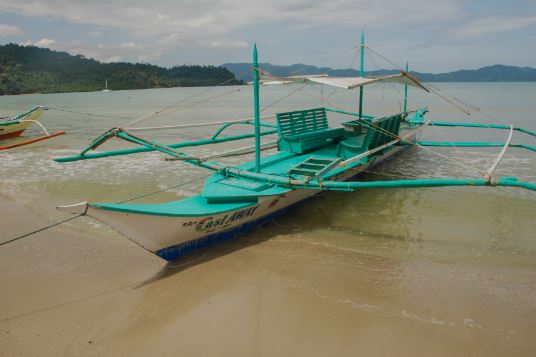
- Bangkas are traditional Filipino outrigger boats commonly used for transportation in coastal areas. They are an integral part of Palawan’s maritime culture.
- Traditional Filipino Outrigger Boats:
- Design and Construction:
- Bangkas typically have an outrigger on one side for stability and a single or double bamboo or wooden hull. They vary in size, from small fishing boats to larger vessels used for island hopping.
- Design and Construction:
- Island Hopping and Tours:
- In tourist destinations like Coron and El Nido, bangkas are extensively used for island hopping and tours. They offer a unique and scenic way to explore the stunning limestone cliffs, hidden lagoons, and pristine beaches.
- Island Hopping and Tours:
- Local Fishing:
- In addition to tourism, bangkas are crucial for local livelihoods, especially in communities dependent on fishing. Palawan’s coastal communities rely on these boats for sustenance and economic activities.
- Local Fishing:
- Efficiency in Island Terrain:
- Bangkas are well-suited for Palawan’s island terrain. They can access remote locations, shallow waters, and hidden coves that may be challenging for larger vessels.
- Efficiency in Island Terrain:
- Community Engagement:
- Engaging with local bangka operators provides insights into the fishing practices, navigation skills, and maritime traditions of Palawan’s coastal communities.
- Community Engagement:
- Sustainability Practices:
- Some operators are adopting sustainable practices, such as responsible snorkeling and fishing techniques, to minimize the environmental impact of tourism on the coral reefs and marine ecosystems.
- Sustainability Practices:
Both tricycles and bangkas in Palawan offer unique and authentic travel experiences, providing insights into the local way of life and the distinct challenges and opportunities presented by Palawan’s geography.
Tricycle’s and bangkas are far more than mere vehicles; they are the important lifeblood of Philippine mobility. The provide essential last-mile connectivity and vital inter-island routes at a reasonable price. Their existence underscores a deep-seated socio-economic reality, offering widespread livelihood opportunities. However, this reliance also highlights a critical challenge: these modes of transportation contribute significantly to traffic congestion and air / water pollution, representing a tension between accessibility and sustainability. The future of Philippine transportation does not lie in their elimination, but in their strategic integration and modernization. Promoting electric trikes, improving safety standards for bangkas, and incorporating them into a broader, multi-modal transit network is crucial. Ultimately, their evolution is central to building a more efficient transportation system.